2005-10-07

Light reading: "North Korea is a lot larger South"

I have a few topics in mind but I haven't got time to write them. So in between, I would share with you this video (or from the source, rightclick to downlaod).

You will find evidence for:
  1. Young American girls have much better geographical knowledge than their compatriots(can pinpoint "even" Sri Lanka quickly)
  2. Whether the next target is Iran, France, or North Korea, our dear friends down under are doomed. The lesson, don't be a big "island" and don't color your country in yellow. It makes an easy target.
  3. Fortunately, these people don't seem to be video game geeks. So they are unlikely to be given control of the star war surgical gizmos

p.s. Please don't make a stereotype against our American friends. Note the interviewer labelled the maps in a misleading way. I am sure the video maker (is he an Aussie or American) has edited out the more sensible interviews, just to achieve the comedy effect, and perhaps also to show us how the simplistic and often biased views of the media could twist people's minds.

2005-10-02

Understanding China's ethnic groups, and I love Curzon's map blogs

Martyn in The Pekingduck has a good crash course for Xinjiang's history. See this site for maps of each Chinese dynasties super-imposed on the present boundary, a high resolution set of maps here, a comprehensive set here, or this one, or this history of China, India and Japan.

But history is only history. I guess we care more about the people who live there now. Curzon had a crash course on the ethnic groups as well, in the language of map. It would help you understand the ethnic variety in China.

I love Coming Anarchy's map collections. Thanks Simonworld for the introduction. I do not share Curzon's passion for Robert Kaplan. I think Kaplan's thoughts are rather shallow and he does not really understand the spirit of Sun Zi. I haven't read his new book, but it seems the Economist agrees with me. That is probably one minor difference between Curzon and me. As a map geek, I found more in common with him, and I think Curzon's map blogs are brilliant.

He has also recently discussed about buffer states, shown us the map images via google earth, a great geography game, "The average American's view on the Muslim world", the African Chunnel, and more. I would click through all his older geographic collections when I have time.

Here are two maps (click in to enlarge, and move the cursor to the lower right corner, wait a second for the 4-legged spider to appear, click it to further enlarge if you are using IE) on the ethnolinguistic and linguistic groups in China via Curzon. Some more introduction on these ethnic groups:

Some explanation to the lingustic families (the legends in the map to the right, for more detail see here), but I would skip the obvious ones

  • Sino-Tibetan is one family. In fact, the difference between different Tibetan dialects (and among Tibetans and its close relative Qiang/etc) are as different(or similar) as Cantonese and Mandarin; Burmese (Myanmar) also belongs to the Tibetan sub-group
  • Within the Han dialects, Wu=Shanghainese group (incl Zhejiang), Yue=Cantonese, Min=Minanese/Taiwanese
  • Kam-Tai includes the Zhuang group, Hainan, and related to Vietnamese, and Thai language
  • Mon-Khmer are the Lao and Cambodian language, located in Yunnan bordering Laos, and a bit of Thailand/Vietnam
  • Altai are the Mongols and Turks, which also include Manchurian and Korean, basically those up north
  • Gaoshan is not indicated in the first map (but in the second), their languages are related to the Polynesian, Phillippino and Bahasa. The reason that Gaoshan is regarded as the ancestors of all these people is due to the linguistic variety (and more recently, confirmed with genetic variety). i.e. the difference among the groups on Taiwan Island is as different as between Taiwan Gaoshans and Hawiians (but the difference between Malays and Hawaiians are smaller!), which indicates that if Hawaiians and Malays are n(th) cousins, then the difference Gaoshans (e.g. Bunon and Ataya) are (N+x)th cousins
  • Miao/Yao are scattered, because they used to be as popular as the Han, but were reportedly defeated by Han and retreat to the mountains (around 7000 years ago)
  • In the 2nd map, the little circle represents Han who live in the cities in minority dominated areas, and triangles are Muslims (Hui) who mingled with Han (they are genetically Han)
  • Update: Not all language has a written form. Korean, Tibetan, Mogolian and Manchu have their own alpahbets (Dai uses Thai); Uyghur, Kazakh, Tajik and Kirgiz use arabic alphabets; Xibo uses Manchu alphabets, Yi and Naxi have their own syllabary and script. Most of the rest do not have their own. e.g. Qiang would use Chinese characters, and the Zhuang's (and a few others) created their own Romantized forms using Roman alphabets/pinyin after the CCP revolution
For those who are interested in Chinese histories, Paul Noll has a great site on maps of each dynsaty in the past (though the resolution is not very high), plus great information about the Koreas , see this Koreas at night from satellite picture)
I hope you will understand more about these people. Despite the well publicized ethnic conflict in the west, ethnic groups in China mostly live in good harmony. However, although there are affirmative policies in China, which actually favors minorities in education, low tax for business, etc., and effectively exempt them from the one-child policy (the cap is 3 children, and almost never enforced), since many of the minorities live in these remote and rural areas, they (also the underprivileged Han rural people) became relatively poorer from the recent economic growth (also because they are not used to doing business). As for Han Chinese who travel to or do business in these areas, it is also important to respect and treat the minorities fairly.
Compare the map above with the satellite picture at night, you can see the minorities (also the rural Han) mostly live in the 'darker' areas. With this post I hope to make them better known to (and better understood by) the outside world, and hence draw more help to improve their livelihood and conserve the environment they live in.
(Update Nov 23) A more detailed map is posted.

2005-09-30

Taiwan's Defense Option (iii): A-bien's paradox or brilliant coup?

In the previous post a few paradoxes have emerged

  • If Chen Shui Bien already knows that the best defense strategy is to maintain status quo and slowly pushing for his agenda, why is he so eager to push for an Arm Procurement deal that damages Taiwan's defense ability rather than strengthens it?
  • As he is supposedly a responsible politician who repetitively renounced KMT's lavish spending in military and diplomacy, why is he willing to commit such a huge amount in a single deal? Yahoo.com.tw's poll shows that 70% people are against this deal. Even though internet poll is often misleading due to its small sample size and multiple registration, Ah-Bien would not ignore such signal (Update: see the chart, bottom 3 colors are those who favors status quo or objects to indepedence, total=65%. source: Taiwan Govt Info Office)
  • Contrary to the pan-Blue allegation, it is unlikely anyone related to DPP can profit from this deal, because of the high profile and attention it attracts. There is unlikely to be any financial incentive for his own party or related business interests. In addition, it is not about US lobbying either, as that could have been achieved with 1% of that amount.
  • Defense budget as % of GDP has decreased from 2.78% in 2001 to 2.50% in 2004 while CSB was in office (source: 行政院主計處/DPP). It seems CSB's priority is not in military spending. Isn't this contradicting this special deal?
  • Why did it took him almost 3 full years before he proposed the Special Budget to the Legislative Yuan in 2003? CSB blamed paperwork, internal research and bureaucracy. But it does not explain such a long time gap
  • When the deal was finally proposed in 2003, why was the proposal so brief and unprofessionally prepared (total length=299 character, for a budget amount of NT$610.8bn)
  • Why the two revisions of the Special Budget all seem to be half hearted effort, with no real change in the actual budget amount? I would have make a comprise and submit the purchase list item by item.
  • Why TSU became the die-hard supporter of the deal, while Ah-Bien has been at ease all the time, commenting that pan-Blue would have to yield (to US pressure?) sooner or later? Consider the 9-25 anti-anti-arms-deal protest gathered only 20k people, which is tiny comapred to any DPP organized carnivals.

My hypothesis: Ah-bien is much smarter than what the pan-Blue would like to believe. This arms deals has never been his baby, instead, it is a KMT legacy handed over to him. However, the US has been pressuring him and he need to sell it to the Taiwanese people. So he cleverly used pan-Blue to play against the greedy arms dealers across the Pacific.

  • The arms deal was first proposed by Lee Tenghui's KMT in 1999, before CSB took office. At the moment CSB was an underdog. So LTH might have been planting the arms deals as a time bomb to sabotage his KMT sucessor Lien Chan, or he was using it to bargain with the US on something else, thinking it is extremely unlikely the Clinton Admin would approve the deal. (The PAC-3 proposal could just be a random idea when some politician/general decided after watching CNN's report on Yugoslavia or the 1st Gulf War, without professional analysis)
    • two surprises emerged subsequently, CSB won the election and W Bush won in US and approved the deal
  • CSB's original plan was probably to push this off beyond 2004, and pass the ball back to KMT. (He was sure pan-Blue would block it between 2003 and the election) He did not expect to win the second term back in 2003. In fact, he planned to stand on the anti-arms-deal side if he lost the election.
  • It was reported that the first estimate was NT$280bn. But it inflated into 610.8bn when the Special Budget was proposed. I am not sure CSB could control that or was happy about that himself.

One may even speculate that the secret meeting between CSB and James Soong earlier this year led to a secret agreement of fighting on the arms deal. If this hypothesis stands, Ah-Bien clearly knows that Taiwan has been put into a terrible bargaining position because no one wants to sell these weapons to it (due to PRC pressure). So he used the domestic controversy to

  • Reduce the package (eliminate PAC-3 and focus in the aircrafts)
  • Bargain for a better price
  • Delay into the next admin as much as possible

Bravo, Ah-Bien, What a brilliant coup! This demonstrates the merit of democracy.

How to prove this? We should find out soon. If major concession was made in the procurement list (delay PAC-3 and/or submarines), or more problems and delays arise even after KMT switched side, we would know that Ah-Bien is a genuine "Taiwan's Son", who looks after the interests of his people. If, instead, CSB would push for the procurement and payment as soon as KMT bent, I would be wrong and Taiwan would be sorry.

Having said that, let me repeat, the best defense option is to bide your time, and do not give any excuse for armed conflict. It is not that difficult to do, and you do not have to give up anything substantial.

As for PRC, if pressure mounts on CSB, it is time for it to show some nice gesture. How about about relocating some of the missile to point somewhere else? or not pointing anywhere. Even lip service regarding the missiles would mean a lot to the Taiwanese people, and it would only be helping its cause. PRC needs to realize that intimidation would only alienate the Taiwanese people further and push them to become supporters for independence. On the contrary, as Mencius said, "If you govern by treating your people like you treat yourself, [and treating other people the same way], you will be invincible where you move, there is no doubt about that. 王如施仁政于民...王往而征之,夫谁与王敌!故曰:仁者无敌。王请勿疑"


2005-09-29

Taiwan's Defense Option (ii): Arms Procurement "Accounting"

As the debate continues, and the disguise in "accounting" of the Revised Special Budget was able to mislead the mass (even some professional journalists) into believing that the deal has been renegotiated, I tried to understand the contents of the arms procurement deal in Taiwan by googling. But it seems hard to find any detailed breakdown of the changes in this Special Budget. No wonder the pan-Blue criticized the Special Budget as a "$2bn/character" special budget (in the original proposal, it was NT$610.8bn on a few paragraphs totalling 299 characters).

  • The Special Budget contains 3 items: 12 P3C anti-sub aircraft (picture above), 8 diesel submarines and 6 PAC-3 batteries (see below for picture and discussions)

Here is a great analysis ("挖肉补疮 台湾军购分文不减") comparing the figures NT$610.8bn, NT$480bn and NT$340bn (US$BN 18, 15, 11) in subsequent proposals. The article does not try to hide its being critical on the deal, so I believe the author is a pan-Blue writer (he used to be columnist for Taiwan's largest newspaper "China Times"). But the facts he listed are consistent with what we read elsewhere. I would be interested if any of you could find flaw in his analysis or mistake in the data. (Sub-bullets in brown are my additional research and comments)

  • "Minister of National Defense (MND) Li Jye said, the reductions of the Special Budget is the most painful, and punishing experience in his life. He had to delete 53 items in his original defense budget (i.e. not the "Special Budget"), and this affects the improvement of the combatting ability...
  • To get from 610.8bn to 480bn, MND cancelled its plan to co-produce naval ships (71.9bn), other accesory and engineering costs (21.8bn) , shifted 19.8 "local spending" into the daily budget of MND, the total amount shifted was 113.5bn, plus a small adjustment in USD/NTD exchange rate (about 20bn), you got 480bn
  • To get from 480bn to 340bn, the same trick was used again. This time it eats into the annual defense budget in coming years. Out of 480bn, 140bn worth of PAC-3 will be shifted into the 'normal budget' in the next 6-8 years, therefore, the Special Budget becomes 340bn!
  • No wonder Lee Jye said it was the most painful exercise
  • There are more questions: the Diesel submarines cost $1.5Bn each, 3 times what it would cost for comparable products
  • MND had said in the past that it needs 21 PAC-3 batteries to counter the 700 missiles from PLA. Taiwan already has 3 PAC-2 systems, adding the 6 PAC-3, still not enough. More than half of the missiles will not be intercepted
    • The PAC-3 really makes no economic sense, see this old report from Taipei Time: PLA has 700 missiles, costing about $1M each.
    • It takes 4 PAC-3 missiles to intercept one. so a total of 2800 is needed. (each cost $3M) so this is a $12M vs $1M arms race. Meizhongtai quoted that pentagon alleged China is adding 75-120 per year, this would mean 300-480 PAC-3 needed for Taiwan in such a race, or US$1-1.5BN per year in cost, 0.2-0.3% GDP, versus 0.004-0.006% GDP for mainland China. 50:1, not a fair or sustainable race.
    • Now taiwan has 200 missiles from its 3 PAC-2 batteries (192 to be precise, 64 missiles per battery), and is going to get 6x128 pac-3 (each set has 128 missiles) in next 10 years, total=768+200=968, capable to intercepting 242 missiles.
    • Therefore, assuming PLA does not add any single missle (they could add75-120 p.a. if they want), it will still have 448 missiles after all the PAC-3 and PAC-2 are fired (assuming 100% interception!, reality is 70-95%). So what is the point?
  • But honestly, Taiwan does not have the resources to enter an arms race. Therefore, it has been suggested we should instead pay the US directly in exchange for protection
  • Meanwhile, MND will reduce the army by 270k soldiers. There will only be 3 brigades, about 5000 soldiers in Quemoy (Jinmen). DPP/MND said the best defense for Quemoy is not with army, but by promoting tourist! -- this is the most brilliant statement by DPP, as the best defense option is to seek peace. This is a valid strategy for any in the world."

    In short, the fact is that all these changes are 'accounting adjustments' and shifting of budgets from other areas of MND. The total cost of the purchase is still at $610bn, the list of procurement has not been changed (6 PAC-3 batteries, 12 P-3C patrol aircrafts and 8 diesel submarines), and the price for each item is still the same. The Special Budget has been changed, but the arms deal has not. It would be met by different budgets. What has changed are the other procurement items and plans for Department of Defense, outside the list of these 6+12+8 items.

    • In the corporate world, if the CEO use this trick in manipulating the budget, if would be against most corporate by-laws. The board of directors has the right to ensure the approved budgets are used for what it is intended to do. Most likely it would be a mis-conduct, or lead to a Spitzer investigation. I am surprised no one in Taiwan has raised this issue.

    As a result, the defense power of Taiwan is weakened by this special budget, because to pave way for this deal, MND had to cut 611-340=NT$271bn in other areas of its budget in the coming 10 years. What this means is that the reason for US blaming Taiwan's lack of seriousness in self defense is totally groundless. I hope Meizhongtai would agree with this. It was precisely the external political interference of this deal that has disrupted Taiwan's defense plan and weakened its defense. Ironically, by bending to the defense industry and hence disrupting Taiwan's defense planning, the US is making it a lot more costly to execute its Taiwan Relation Act when needed, unless, of course, if US does not believe that a war would ever happen. I surely hope for such scenario.

    DPP inherited this from Lee Tenghui's KMT. So it is not its fault to be in this strange decision. The mainland is also to be blame for putting Taiwan into such bad negotiation position (by blocking virtually every potential supplier, and pointing the missiles at the island). However, as I have argued before, the best option for Taiwan is to bide its time. Similarly, the best strategy for the mainland is to remove the missiles and win the hearts of the Taiwan people. I still believe the chance of a war is extremely low, and that whether Taiwan spend this $610.8bn or not is irrelavant in the likelihood of a war. Furthermore, from what DPP said (and did) about Quemoy (Jinmen), Chen SB obviously understands the best strategy to defend the island, but he seems unwilling to adopt the same strategy for Taiwan, or was pressured into doing something else. If, as DPP said, the best defense for Quemoy is to develop tourism. What makes the strategy for defending Taiwan so different?

    (I have a theory to explain this paradox for A-Bien, see next post)

    ---

    Update: official explanation for the need of these 3 weapons, seems the main strategic objectives are for 'psychological effect' and 'anti-blockade'. The ability of PLA to blockade Taiwan is an enormorous myth, if you look at US establishment in the east and NE of Taiwan. As for PAC-3 as psychological deterrant, I will leave it for you to judge :).

    • P3C: (Head of Navy Preparatory Training Chen Yongkang) "Taiwan strait is too shallow for submarine activities, so the subs are needed to patrol the open sea on the east" in order words, it is for anti-blockade (or assist US intervention?) in the sea between Taiwan and the Phillipines.
    • Diesel-submarine: (Navy Chief of Staff, Admiral Lee Haidong) same reason as above, for anti-blockade and protect sea-route
    • PAC-3: (Admiral Lee Haidong) "although the PAC-3 is expensive and seems un-economical, the value is the psychological image of protection on our strategic assets and morale"

    On the other side of the strait (not related to this issue), there is a great analysis on China's Grand Strategy (via Simonworld and Zenpundit); and a treatise on 'modern history' of Tibet.


    2005-09-24

    RMB update Sep-23-2005: non-USD gap(band) doubled

    Consider 10 horses pulling a cart on a straight road, where 9 small horses pull with elastic bands of different length and the 10th horse (which is much bigger and stronger) pulls with a relatively stiff rope. How would this cart move if the 10 horses are moving to the same direction? What if the 10 horses are moving in a slightly different directions with 'random walk' in small step (i.e. statistical random motions along the road). How would the trace of the cart's path look like? Is the path "smoother" if the 10 ropes are (1) all elastic? (2) all stiff? (3) if only the 10th horse with a stiff rope is used and the other 9 released? (4) if the cart is replaced with a horse, which has its own will of movement, and if this cart-horse becomes stronger? (5) what if all the 10 (or 11) horses are tied with ropes and bands of different elasticity?

    Now consider making the 9 elastic bands twice as tactile.

    The 9 horses are EUR, JPY, KRW, etc. The 10th horse is USD. The cart is RMB (which can also be replaced with an 11th horse). The lengths of the rope and the elasstic bands are the exchange rates. The road is a proxy for the basket peg. Current length of the 10th rope (which is slightly elastic) is 8.09m long. PBoC has just made the elasticity of the other 9 bands/ropes' twice as large.

    According to PBOC, more flexibility (see also English media reports) has been introduced into the basket peg regime. As expected the daily trading gap for non-USD was significantly widened, (from previously unannounced 3%) to 6%. It was also said that the management (of USD) will mainly be done through "managing the spread", althoug the gap is (reportedly) kept unchanged. The announcement was made internally on Sep 14, but only posted on the PBC website today

    • For USD cash, the buy and sell spread is capped at 1% (defined as from 1% of the central parity), for cash transaction (at tell window) it is capped at 4%
    • 外汇指定银行对客户挂牌的美元对人民币现汇卖出价与买入价之差不得超过中国人民银行公布的美元交易中间价(上一日银行间市场美元收盘价,下同)的1%([现汇卖出价-现汇买入价]/美元交易中间价×100%≤1%),现钞卖出价与买入价之差不得超过美元交易中间价的4%([现钞卖出价-现钞买入价]/美元交易中间价×100%≤4%)。在上述规定的价差幅度范围内,外汇指定银行可自行调整当日美元现汇和现钞买卖价。
    • PBoC did not talk about the USD gap, presumably it is kept at the old 0.3%. (BBC/FT reported with certainty, but it is not impossible that PBoC might test the widening secretly or announce another widening soon);
      • one possible scenario is asymmetric drifting: say, today central parity is 8.10, with buy/sell=7.95/8.25; tomorrow the buy/sell will be 8.10/8.32; that is a change certainly larger than 0.3%! (unless, did I make a mistake?). This is an example for USD cash. For non-cash the effective drift can still be as large as 0.5%.
    • The non-USD gap is enlarged from +/-1.5% to +/-3%, effectively doubled from Jul/21 gap (note the +/-1.5% has not been disclosed before, but was observed if one has been monitoring the data)
    • 每日银行间即期外汇市场非美元货币对人民币的交易价在中国人民银行公布的该货币当日交易中间价上下3%的幅度内浮动
    • For non-USD, there is no cap on the buy-sell spread
    • 取消非美元货币对人民币现汇和现钞挂牌买卖价差幅度的限制,外汇指定银行可自行决定对客户挂牌的非美元货币对人民币现汇和现钞买卖价。

    I have long suspected the gaps for non-USD have been in generally much wider than that for USD before, i put my estimate at (at least) 0.5%-1%, now it is confirmed to have been 1.5%, and will be doubled. I believe the USD gap would be further expanded soon. The practice has probably been tested all along. If that is the case, part of the puzzle that USD has been largely "pegged" can be explained. There are many parameters in the basket peg. Each currency is one of the parameters (too many parameter is not necessarily a good thing, as it encourages human error, unless there is a strict internal set of rule in PBoC). By effectively 'floating' non-USD currencies, USD/RMB rate can certainly be kept relatively stable. (while the basket weighted average unaffected)

    In addition, one of the mechanisms PBoC employed is to increase the transaction cost (typical transaction cost/spread in forex market is 0.2%, for RMB it is higher, close to 1%) making speculation more costly. It will discourage frequent trading and hence reduce short term volatility, the downside is it takes longer to reach the equilibirum point (less efficient market). The high transaction cost would help to reduce the need for cross-rate intervention as suggested by Halpenny in the report by FT, because EUR-USD arbitrage through RMB as a medium can be made prohibitively expensive. This would be a short term fix. For longer term discrepancy in cross-rates, the crawl will slowly narrow the arbitrage opportunity.

    The more likely result is, businesses will be encouraged to convert RMB directly into non-USD currencies, and more contracts will be denominated in non-USD currencies, which are what PBoC wanted.

    There are merits of this regime, as it becomes extremely hard for speculators to second guess the basket and trends, while maintaining the desirable degree of overall flexibility, even on USD. It also complicates the jobs of speculators, as it will be a multi-currency attack rather than a simple work of choosing one currency (e.g. USD/RMB).

    The problem of this, however, is that the inertia to shift the USD/RMB rate is so big that it is not too different from the old USD-peg regime (high volatility, i.e. daily change, to non-USD and relatively unchanged USD rate). In fact, the widening of the non-USD gap with a narrow USD gap means a comparatively more rigid peg to the USD. As it is the overall basket that is managed, relative rigidity means real rigidity. This is not a healthy solution for China in the long term. It could even be argued as a reverse step from July 21. Unless, my speculative interpretation of "managing through spread" above is correct.

    Hopefully, some measures would be introduced to mediate the USD and no-USD volatitily in near future. i.e. widening the USD gap. But if my gut feeling is right, USD rate change would be less than 2.5% p.a.

    update Sep 24: Japanese Minister of Finance Watanabe commented on the 10 times difference in USD and non-USD gap, saying it does not make sense as a long term solution (in fact, the difference is 20 times, not 10 times. 0.3% vs 6%). he also mentioned that he discussed with PBoC and they are aware of the problem. His reasoning is based on the cross rate implication as discussed above. However, I would tend to think it is worth experimenting to see how the market behaves under such constraint (it is academically interesting). There are a few reasons that it might not be as straightforward as one has thought, because

    1. If RMB transaction becomes large enough in the international forex market, then one needs to consider the interaction of direct eur-usd and the indirect (arbitrage) eur-RMB-usd rates. But RMB volume will be tiny for at least another decade.
    2. The time lag effect of non-USD leading USD movement (hence the stabilizing effect) for an "pseudo"-USD peg (see horse-cart analogy above)

    update Sep 25: PBC published a Q&A elaboration to explain the differential gap and flexibility in transaction charge (buy/sell spread). It explained why USD/RMB rate has been more or less pinned to 8.09-8.11. It also implied that with the enlargement in spread, the daily crawl in USD would be larger than the past 2 months. It also confirmed my conjecture above of "assymetric buy/sell" rate setting by the commercial banks

    • The spread had been restricted at 0.2% after Jul/21, which is smaller the the gap of 0.3%. There is a possibility that the bank would lose on a tranaction, if it square the contract the following day. As a result, the commercial banks tend to maximize the spread by setting the buy and sell quotes to the extremity of the permitted values, and effectively there is only one price everyday (no crawling)
    • 7月21日后,银行对客户挂牌的美元对人民币现汇买卖价不得超过央行公布的美元交易中间价上下0.2%,而银行间外汇市场美元对人民币的交易价在央行公布的美元交易中间价上下0.3%的幅度内浮动,前者幅度小于后者幅度,银行存在经营亏损的可能。假定某天银行对客户挂牌价格,人民币对美元升值了0.2%,从前一天的8.0890升值到8.0728,从客户手中收购1万美元付出80728元人民币,到银行间市场平盘时,发现平盘价格却升值了0.3%,达到8.0648,1万美元只能卖得80648元人民币,该笔交易直接亏损80元人民币。此外,7月21日后银行对客户美元对人民币现汇价格仍以央行公布的上一日收盘价为买卖中间价,加之最大买卖点差(即浮动幅度)只有上下0.2%,银行为规避经营风险,不得不每天一开市,就把价格挂到规定浮动幅度的两极,客观上造成银行在美元挂牌价格上只能一日一价,无法灵活调整。
    • "Management by spread has 3 merits: 1) ensure that the central parity is enforced; 2) encourage price movement within the day (for the commercial banks) 3) allows assymetric buy-sell quote setting (effectively changing the central parity?)
    • 价差幅度管理的优点在于:一是坚持了美元挂牌价格必须以央行公布的交易中间价为指导价;二是银行增加了自主性和灵活性,只要在足够大的价差范围内,银行牌价就可实行一日多价;三是只规定价差,银行可在价差范围内制定不以交易中间价为中心的非对称牌价,有利于银行根据当天市场供求情况和自身头寸灵活应对。
    • [after Jul/21]...when a commercial bank is determining the EUR rate, it will need two parameters, the USD rate (from previsous day) and the USD/EUR rate from international market (real time), multiply them to obtain the real time rate for EUR/RMB... from Jan/1 to Jul/31 of 2005, the maximum daily 2.2%, therefore the 1.5% restriction we have set before will lead to loss of the bankss. That is why we enlarge the gap to become +/- 3%
    • 7月21日配合人民币汇率机制改革,中国人民银行发布了调整汇价管理办法的通知,其中,银行间即期外汇市场上欧元、日元和港币等非美元货币对人民币交易价在中国人民银行公布的该货币交易中间价(即上一日央行公布的收盘价)上下1.5%的幅度内浮动。该文同时规定,银行对客户的非美元对人民币买卖中,买卖中间价由银行根据国际外汇市场行情自行套算,这相当于与国际外汇市场完全接轨。例如,银行在制定欧元对人民币汇率时要找到两个参数,一是国际外汇市场欧元对美元的实时汇率,二是央行公布的上一日美元对人民币的收盘价,前一个参数每时都在变化,一天波幅往往很大,后一参数一天之内固定不变,因此,两个参数相乘得出的欧元对人民币的汇率波幅就完全取决于国际市场欧元对美元的波幅。据我们统计,2004年1月1日至2005年7月31日期间,国际外汇市场欧元对美元汇率日波动最高幅度达2.2%。假定某天欧元对美元涨幅超过2%,银行对客户欧元对人民币汇率的涨幅相应也超过2%,而银行间外汇市场欧元对人民币一天最多只能涨1.5%,理论上银行可能面临0.5%的亏损率。为此,《通知》中将银行间外汇市场欧元、日元、港币等非美元货币对人民币交易价浮动幅度从上下1.5%扩大至上下3%。
    • Before Jul/21 the gap for EUR was 10%, JPY 1%, USD 0.3% (I thought it was smaller?), now non-USD gaps are unified to 3%......the USD gap is significantly lower, but it is reasonable because USD is more liquid, and the currency which is more liquid tend to be less volatile, so a smaller gap is justifiable...
    • 为什么银行间即期外汇市场美元浮动幅度不作调整,只调整非美元浮动幅度?是否有进一步调整美元浮动幅度的打算? 答:首先,非美元浮动幅度高于美元幅度是我国外汇市场长期管理实践的延续。汇率机制改革前,我国银行间外汇市场非美元的浮动幅度就比美元大,如欧元为上下10%、日元为上下1%,而美元只有上下0.3%。汇率机制改革后,根据外汇市场多年运行实践,从增加汇率灵活性的需要出发,将非美元浮动幅度统一到1.5%。其次,美元浮动幅度较小符合外汇市场美元流动性高的客观国情。目前,我国外经贸活动80%左右以美元计价和结算,反映到国内银行间外汇市场的即期交易中,美元交易量占绝对优势,美元的流动性远远高于欧元、日元等非美元币种。国际外汇市场的经验表明,流动性越高的货币,市场越容易出清,价格的波动性就越小。国内外汇市场美元流动性较高客观上要求价格波幅较低,相反欧元和日元流动性不足,客观上只能用更大的波幅给交易者提供风险补偿。第三,汇率机制改革以来的市场运行情况表明,美元浮动幅度是适当的,它不但满足了市场参与者的交易需求,也保证了人民币汇率水平的基本稳定。

    2005-09-23

    Zoellick on China: there are more than what he preached

    Everybody focuses on what Zoellick preached to China. There are good discussions by Daniel Drezner, Sam Crane, and many others. I don't think I have something more intelligent to say than they already did about whether all his lessons are fair, or what the most tactful way to deliver the message should be. Moreover, I recognize that he is addressing what his audiences are concerned about.

    Drezner kindly urged us to read the whole script. As I read on, Zoellick had a few sentences for everyone in the audience, especially to the neo-conservatives. Unfortunately, WaPo did not elaborate on this. They are probably too obvious to those who understands China, like the reporters who covered the topic, but not so for many other people who live in the West. These very important messages of Zoellick are the less quoted, but are equally important:

    • China has a responsibility to strengthen the international system that has enabled its success. In doing so, China could achieve the objective identified by Mr. Zheng: "to transcend the traditional ways for great powers to emerge."
    • If it isn’t clear why the United States should suggest a cooperative relationship with China, consider the alternatives. Picture the wide range of global challenges we face in the years ahead – terrorism and extremists exploiting Islam, the proliferation of weapons of mass destruction, poverty, disease – and ask whether it would be easier or harder to handle those problems if the United States and China were cooperating or at odds.
    • For fifty years, our policy was to fence in the Soviet Union while its own internal contradictions undermined it. For thirty years, our policy has been to draw out the People’s Republic of China. As a result, the China of today is simply not the Soviet Union of the late 1940s:
      • It does not seek to spread radical, anti-American ideologies.
      • While not yet democratic, it does not see itself in a twilight conflict against democracy around the globe.
      • While at times mercantilist, it does not see itself in a death struggle with capitalism.
      • And most importantly, China does not believe that its future depends on overturning the fundamental order of the international system. In fact, quite the reverse: Chinese leaders have decided that their success depends on being networked with the modern world.
    • If the Cold War analogy does not apply, neither does the distant balance-of-power politics of 19th Century Europe. The global economy of the 21st Century is a tightly woven fabric. We are too interconnected to try to hold China at arm’s length, hoping to promote other powers in Asia at its expense. Nor would the other powers hold China at bay, initiating and terminating ties based on an old model of drawing-room diplomacy. The United States seeks constructive relations with all countries that do not threaten peace and security.
    • In China, economic growth is seen as an internal imperative, not as a challenge to the United States.
    • Therefore, China clearly needs a benign international environment for its work at home. Of course, the Chinese expect to be treated with respect and will want to have their views and interests recognized. But China does not want a conflict with the United States.
    • Beijing also has a strong interest in working with us to halt the proliferation of weapons of mass destruction and missiles that can deliver them. The proliferation of danger will undermine the benign security environment and healthy international economy that China needs for its development.
    • China and the United States can do more together in the global fight against terrorism. Chinese citizens have been victims of terror attacks in Pakistan and Afghanistan. China can help destroy the supply lines of global terrorism. We have made a good start by working together at the UN and searching for terrorist money in Chinese banks, but can expand our cooperation further.
    • Indeed, President Hu and Premier Wen are talking about the importance of China strengthening the rule of law and developing democratic institutions....In his Second Inaugural, President Bush recognized that democratic institutions must reflect the values and culture of diverse societies. As he said, "Our goal… is to help others find their own voice, attain their own freedom, and make their own way."
    • China needs a peaceful political transition to make its government responsible and accountable to its people. Village and grassroots elections are a start. They might be expanded – perhaps to counties and provinces – as a next step.
    • Tonight I have suggested that the U.S. response should be to help foster constructive action by transforming our thirty-year policy of integration: We now need to encourage China to become a responsible stakeholder in the international system.
    • When President Nixon visited Beijing in 1972, our relationship with China was defined by what we were both against. Now we have the opportunity to define our relationship by what are both for. We have many common interests with China. But relationships built only on a coincidence of interests have shallow roots. Relationships built on shared interests and shared values are deep and lasting. We can cooperate with the emerging China of today, even as we work for the democratic China of tomorrow.
    Please read for yourself the whole speech. How US treats China could sway China towards Zheng Bijian's vision, or down Zhu Chenghu's path. The West has the responsibility and interests to help China steer to the right path.

    p.s. As a difference of emphasis between chinese and Western media, see how they reported China's reaction: Xinhua vs AP. Zoellick probably briefed Zheng Bijiang what he has to say in New York, and Zheng would then tell Qin Gang to read the whole speech and not overreact. On the other hand, AP expected something to write, and created a title that is not really what Qin has said. Quite amusing to read. Diplomats and politicians are a different kind of animals. So are journalists.

    2005-09-22

    Taoist Lao Zi as a strategist, and the Taiwan issue

    Sam Crane has a great paragraph regarding the North Korean situation. What has intrigued me most was his quoting of Lao Zi in Dao De Jing.

    Lao Zi is actually a great strategist himself. The quote (paragraph 69) is:

    • 'There was once a saying among those who wielded armies:"I'd rather be a guest than a host, much rather retreat a foot than advance an inch." This is called "marching without marching,rolling up sleeves without baring arms,raising swords without bandishing weapons, entering battle without facing an enemy." There's no greater calamity than dishonoring an enemy. Dishonor an enemy and you'll lose those treasures of mine. When armies face on another in battle. It's always the [sorrowful/oppressed] one that prevails.' -- The difference in translation is mainly in the last phrase. I think the more appropariate word for "ai-zhe" is probably "the humble/oppressed" or "the one who recognize one's weakness/sorrow"
    • Original in Chinese, "用 兵 有 言 : '吾 不 敢 为 主 , 而 为 客 ﹔不 敢 进 寸 , 而 退 尺 。 ' 是 谓 行 无 行 ﹔ 攘 无 臂 ﹔扔 无 敌 ﹔ 执 无 兵 。祸 莫 大 于 轻 敌 , 轻 敌 几 丧 吾 宝 。 故 抗 兵 相 若 , 哀 者 胜 矣 。"
    • Henricks translation: "Those who use weapons have a saying which goes: "I don't presume to act like the host, and instead play the part of the guest; I don't advance an inch, but rather retreat a foot." -- This is called moving forward without moving forword. Rolling up one's sleeves without baring one's arms— Grasping firmly without holding a weapon— And enticing to fight when there's no opponent. Of disasters, none is greater than [thinking] you have no rival. To think you have no rival is to come close to losing my treasures. Therefore, when weapons are raised and [the opponents] are farily well matched, Then it's the one who feels grief that will win.

    This is a great quote. It applies to the Taiwan defense option (as discussed in my previous posts)as well.

    • If Taiwan does nothing, after a few decades, its threat may disappears and the problem resolved by itself (as mianland China changes). Self determination would then become possible
    • For the mainland, if it does nothing and let go of its persistence about "one China". maybe the popular vote will not turn out to support independence. And even if it does, perhaps after another century taiwan would return into the confederate. Canada let Quebec voted, and they preferred to stay. For the Taiwanese, they would only want to join the mainland a few dacades later (if they do)

    This is in essence what Sun Zi said, "the supreme excellency is winning without waging a war". Applied to the Soviet Union (by US in the cold war) in the past. Will apply to Taiwan, to North Korea, and to Iran as well. There are many ways to win without waging a war. This is particularly true if you think righteousness is on your side, because time is on the side of righteousness.

    2005-09-21

    Misnomer of the legalist Shang Yang, and how to fix the mess in China's legal system

    Shang Yang (商鞅) was widely regarded at the representative figure in the school of "legalism" (法家)in 300BC. Chinese historian attributed the sucess of Shang and the Qin dynasty for its implementation of a 'legal system', which eventually resulted in Qin Shi Huang unifying China in 221BC.

    update: thanks to Sam Crane for pointing this out, I should make it clear that Shang Yang is not the typical Legalist as seen by Chinese historians. And that I believe they have missed the most important aspect of Shang's thinking. I believe it is Shang Yang's spirit (not the "Legalist" school) who could help China fix the legal system. See comment filed below.

    IMHO this neglected an extremely important aspect of the laws introduced by Shang (and the spirits), that Shang was first of all, a market economists. Just examine a few of the most important pieces of his laws
    • Reward and punishment based strictly on written laws (信赏必罚) - setting the market rules and adhering to them
    • Clarity and implementability of the laws (even applied to military): e.g. elimination of one enemy in war (need to show the head/ear as proof) would be rewarded by promotion of 1 level, land of 1 hactare, and house of 9 acres (能得甲首一者,赏爵一级,益田一顷,益宅九亩)
    • Encourage agriculture production by raising price (食贵则田者利,田者利则事者众-商君书·外内) - he was among the first to realize the relationship between price elasticity and demand/supply relationship
    • Reduce tax to encourage production (相对降低农业租税,对农业是“征不烦,民不劳”-商君书·垦令;“不农之征必多,市利之租必重”-商君书·外内)- this is actually another demonstration of his deep understanding in pricing

    These are just some of the examples. We can find a lot more of the incentive (punishment) system in his book of laws, and for each rule he drafted he had a clear objective he wanted to achieve. Shang Yang was running the Qin Kingdom like a modern business, or a Singapore Inc.

    Deng Xiaoping realized this, and China was able to push market economy even further than the capitalistic USA. e.g. the commercialization of its space program that puts NASA to shame. However, Deng had a much tougher job than Shang, so his reform had focused mainly in money related matters.

    Why am I talking about this? Because I just read this NYT report on China's legal system. The suffering of the innocent peasants will make any reader cry and at the same time outraged.

    • A peasant was sentenced to death for rape and murder after uninterrupted torture by police officers. After the real murderer turned himself up in a neighboring town and admited to 18 counts of rape. The police in the tow towns conspired to reduce the crime count to 17 so that the poor peasant was kept on death roll, to save the embarassment of the police officers. Even after all this was exposed, the police officer involved still got promoted!

    China already has a pretty complete set of laws. The problem is not in the laws, lawyers or judges (well, incompetent judges, yes). It is the implementation that is faulted. It is the lack of an effective punishment (and incentive) system for these people. To fix it, Shang's market principle could be applied. Any violation of law-enforcing members (from police officers to the judges), large of small, needs to be documented and there should be consequences to the mistakes. Without accountability there is no system.

    One of the reasons Chinese are reluctant to punish the bureacrats is the general tolerance of mistake for the learned and authority, perhaps thinking these people are rare treasures(!). This can be traced to the Confucius teaching of 'the non-punishability of the authority' (刑不上大夫-礼记), and of course conveniently defended by those in power, especially those who do not deserve to be in power. This MUST be changed.

    If China can implement the incentive system it had so successful preached to the its Aeronautic Agency also to its officer appraisal system (including that of the judge and law-enforcement departments), the legal system could be fixed. Of course, one of the well tested mechanism in the West is to let the press and opposition party to check those in power. China already has the internet as an alternative to the official (censored) media. In a couple years the townships are also going to welcome their elected majors. But these won't be enough. Maybe it is time CCP create a 'balancing power' within itself? - if it is so afraid of competition. Or tell me any alternative that could make this work?

    p.s. Confucism and Dong Zhongshu had basically killed China's creativity 2000 years agos. If the Hundred_Schools_of_Thought (諸子百家) was allowed to thrive, China could have reached Renaissance well before the West did. The academic progess in the 400 years from 600BC to 200BC surpassed the total of the 2000 years that followed - to be elaborated in a future post, stay tuned.

    2005-09-19

    Light reading: Tian-xian MM

    Some complained that this blog is too dull and too serious. So I try to balance the "seriousness" by interlacing with some light reading. So here it is.

    update(Sep 21)...original bbs post series here: (1) (2) (3) (4) (5) ; streaming video interview just available on SCOL and here
    To counter Elder Sister Lotus, China now has Younger Sister (Meimei) Heavenly (Tian) Fairy (Xian): Tianxian MM ("天仙MM") was first posted by a driver/photographer who stumbled upon a minority village (甘堡屯) in the mountain in Western Sichuan. The orignal poster called her Tianxian because there is a Chinese phrase for surprised beauty called Xian Nuu Xia Fan (and angel fell into the mundane world [by accident] ). Tianxian MM (her real name is Erma Ina) quick reached a bigger (and well deserved) fame than Fuyong JJ. She is a village girl from the minority group of qiang (羌), an ethnic group related to the Tibetans.

    Tianxian MM is not as stunning as the TV starlet Zhang Lanlan. I guess her appeal is from her innocence and purity, in the unpolluted rural area, and a culture unspoiled by the commercialized capitalistic Han.

    This is an example that the ethnic conflict in China is much milder than in other countries, when minorities are generally admired and appreciated (yes, esp the girls, of course. In Super Girl Vocie Show, the minority contestants were always given special applauses and cheers from the Han audience). In fact, other than Han arrogance over the minorities (just like Shanghainese arrogance over Anhui/Northern Jiangsu), minorities are fairly treated and well respected in China (similarly for Tibetans as a minority and culture - the Tibet prosecution theories in the West were much exaggerated, in that Han people suffered the same fate during cultural revolution). e.g. one-child policy does not apply to non-Han ethnci groups, and many children of cross marriage choose to identify themselves as minority group, because of better education (and other) opportunities via an "affirmative" policy. Note also that Muslim is considered as a minority group, even though genetically many are Han Chinese.

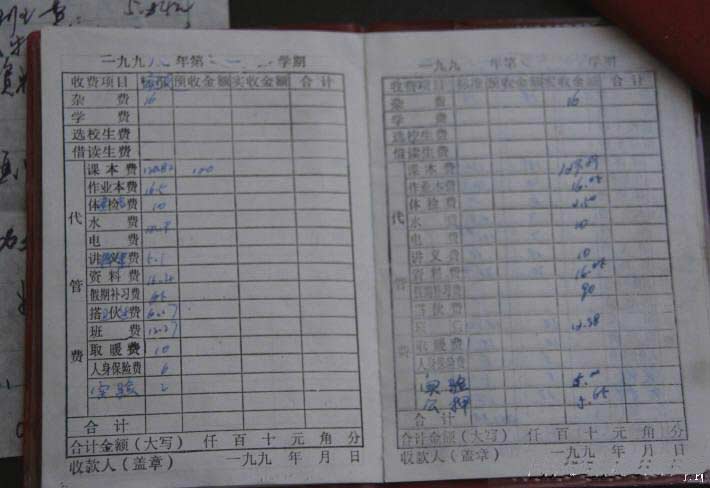
    See also the pre-fame photo of this innocent girl here (original is in auto.tom.com/forum) and summarized media report there. In the "pre-fame thread" the poster looked at TXMM's education bill in 1998, and expressed his guilty that he could have paid for one year's education (textbooks and fees) for this girl if he has one less hotpot meal. Let's be (wishfully) optimistic, and hope that Tianxian MM can become the ambassador for ethnic harmony and rural education.
    (The links are in Chinese, but it is the pictures that are more interesting. and I am sure ESWN will cover this soon.)
    ---
    update (Sep20): now ESWN did cover it :) so my laziness is justified. I knew his stories are always more interesting to read than the dull ones here.
    ---
    update (Sep20): some people questioned about TXMM's finger nails and other feature. I can testify that this is not uncommon. TXMM has been a migrant worker working in Chengdu, and went back to the village to take care of her ill father. She spent some time in the city and learned about the nail polishing job.
    1) It is very common for migrant workers to skip work for a few months and go home, either because of harvest/sowing season, or family problem, or unhappy work environment. Jobs are always easy to find again.
    2) When we talk about migrant workers, we always think about those who move from inland provinces to the coastal cities. In reality every city in China has migrant worker. Young women from Sichuan villages would work in small cities in Sichuan, larger city (Chengdu), nearby province (Wuhan), or coastal cities (Dongguan/Shenzhen), all depends on how far she is willing to be away from her mom. The closer they are from home, the more often they would take breaks back home in between jobs.
    update (Sep20):
    ...more photos here
    ...the reason the girl became friend with a stranger from the city: her brother-inlaw and sister-in-law despise the poor village but the photographer was able to respect the villagers. "她说我之所以没扫你兴、叫你爬,是你的那份真诚与固执打动了我。我嫂子嫁我大哥后,县城里的人,不得了哦,回寨子就一次,嫌这嫌那,住一天就奔山了。我姐夫,城里人哟,也总共来一次就奔山了,还丢下一堆酸酸话。你来,和乡亲们处得那么好,对爹妈、老人们那么尊重,对山娃儿些那么爱,我才一直在配合你到处走。你知道吗,你一走,闲言碎语有多少?别把山寨想得那么简单,长舌婆多的是!我回来住几个月议论就很多了!没出息、耍垮方了的人才会回来,这就是他们公认的道理"
    - The satellite dish. Chinese government encouraged satellite TV in early 1990s, the objective was to cover remote areas like this village. Each province has a Satellite TV Station, in mountainous province Guizhou Satellite TV Station is probably more popular than network TV.The famed Super Girl was produced by Hunan STV. TXMM is a fan of Li Yuchun and Zhou Bichang.
    - This the the pepper used in Sichuan Hotpot, RMB40/kg

    - This a (normal fixed network) phone, and its antenna (via a cellular adaptor),

    a more economic way to connect remote areas with the GSM/CDMA wireless network
    update (Sep22): original quote by Mr Yang (aka 浪迹天涯何处家)
    • "There is another reason I tried to help TXMM accepted by the mass. I have business in Switzerland, my wife and daughter live there. One day, a Swiss neighbor came to tell my wife that he learn Sister Lotus is now the idol of the Chinese people. I felt this hard to take, and I wanted to let them know what the majority of the Chinese think, and that we appreciate something that is not neccessarily strange or abnormal or eccentric...I think TXMM represents a healthy, innocent, ethnic image. although it is harder to reach fame quickly being in the mainstream, I think if there is beauty, there will be appreciation. Now she made it......I am just a common person, I believe in the power of the internet."
    • "“我现在努力让大家接受‘天仙MM’其实还有另一个重要的原因。”浪兄提起芙蓉姐姐和木子美等人物的时候十分激动。    “我是在瑞士做生意的,妻子和女儿也都在瑞士生活,有一天我妻子打电话来告诉我一件事情让我十分吃惊,你猜是什么事?她在和瑞士的老外邻居聊天的时候,老外跟我妻子说:‘我知道你们中国人现在的偶像是芙蓉姐姐!’”    “我当时就觉得难以接受这个事情!”浪兄的声音提高了八度,“虽然说我是一个四十多岁的老男人了,可能也不是那么时髦,但是在我看来,芙蓉姐姐或者类似木子美这样人,实在难以从她们身上感受到美———你觉得她们美么?她们红到了老外都知道了实在让我难以接受。我就想,难道现在的网络世界里都必须靠脱、必须靠一些比较病态的东西才能让人们关注么?我不相信!”    “相反,羌族妹妹是一个非常健康的形象出现的。在我的眼里,她已经抽象化成了一种美丽的、民族的、清纯的形象,我相信这样的正面形象一定会被广为接受的。我承认,正面的形象实在是太难走红了,要红到一种火暴的状态更是困难,但是只要是美的,总会有人欣赏!现在她已经做到了。”        我只是一个普通人,我相信网络的力量"

    How to reform China's oil industry (iii) - oligarchs and deregulation

    As discussed before, China has serious structural problem in its oil price, and SDRC is responsible for this mess. The problem lies not only in its price control, but also in the oligopoly. Furthermore, the coupling of oil extraction, refinery and retail value chain is nullifying any effort to improve efficiency.

    Chinese media are also looking at this problem, and reaching similar conclusions. Here are the key points listed in an excellent essay by Chinese economist Sheng Hong (盛洪) about a month ago:

    • Sheng argued that gasoline price in China is not too low, it is the lack of competition (and hence low efficiency) that caused the problem. He compared the pre-tax gasoline price for a few countries, in RMB/Liter on August 1st, 2005 (for grade RON 93=PON 89) - I am not sure how Sheng accounted for VAT, but that is only a small percentage compared to fuel duty and does not affect his conclusions (probably also compensated by lower labor/rent cost in China as well)
      • USA: 4.49 (5.33 incl tax)
      • Germany: 4.39 (12.58)
      • France: 4.09 (11.9)
      • UK: 4.13 (12.7)
      • China: 4.26 (4.26)
    • The current price cap does not work, as it does not reflect the true economics in the industry. For imported crude, the oligarch are probably adversely affected by the price control. For domestic crudes, they are making obscene profit, because the overall price has rised but cost (of extraction to refinery to retail) does not change. It is all very muddled and impossible for SDRC to determine a fair market price
    • The cost for domstically produced crude: the state only charges charge RMB30/ton of mining loyalty fee (the US charges about 1/6 crude price as loysalty for mining, which is US$73 per ton, assuming crude price is $60/barrel. 1 ton=7.3 barrel). So the oligarchs are actually making obscene profit at mining, hence there is no incentive to improve efficiency. (note: the cost of exploration and mining is supposed to be higher for China, due to management expertise, technology and to a lesser degree, geological factors
    • Current price control is only at the retail level. The oligarchs are free to set wholesale prices. By setting a high wholesale price, or delaying/refusing supply to independent retail stations. Independent Retail Gas Stations are crushed
    • Sheng also pointed out a fatal mistake by SDRC in 1999 (#38 document), where smaller refineries were shut down in the name of "improving scale and efficiency". This essentially eliminated competition for the oligarchs. Sheng also blamed "#38" for failing to require the oligarchs in providing "Universal Service Obligation", (and "uninterrupted service") which is a common obligation for oligarchs (e.g. in telecom industry), essentially giving up any check and balance for these oligarchs
    However, SDRC is still resisting, citing various lame excuses, such as various complications (lack of competition and fear of smuggling) created by themselves in earlier years. There are a few problems to be solved, and SDRC need to untangle the complications it created ASAP

    • Some Chinese media tend to include road tax into the cost of operating a car, but that is nonsense, because a fixed car tax will not discourage oil usage, instead, it is more likely to encourage wasting
    • Yes, lifting price cap alone does not solve the problem. Because there is no real competition. The oligarchs will continue (and be encouraged) to operate under sub-optimal efficiency. Competition is needed to ensure a fair price
    • As long as the value chain (from extraction to refining to retail) is integrated, it is hard even for the oligarchs themselves to improve efficiency, because there is no accoutability for the sub-divisions inside the oligarchs. Therefore, lifting price control can help to discourage waste, but will not help to improve efficiency
    • One probable reason that CNPC, Sinopec and CNOOC have been so eager in securing crude (instead of) refinery assets is they could ask for state subsidy in terms of cheap capital and the profit is less affectedd by domestic price control. This obviously does not align with China's interests (or Chinese people's), as acquisition might be overpriced, and the more urgent needs for refinery investment are not met

    To address the aforementioned problems, China needs to form a clear objective for its energy policy. Among the key objectives are, (1) encourage efficiency use of oil (vs other energy sources), and (2) improve efficiency of the oil industry (by competition). This can be achieved by deregulating the oil industry and removing price control at the same time:

    • Deregulate oil industry by decoupling the oil exploration/extration, refinery, retail value chain
      • In transition period, the price control can be impose at the crude oil level (using international market price - not to be large than a few %), instead of at retail gasoline level. This is easy to implement, e.g., by introducing an independent company to arbitrage via importing/exporting
      • Once the crude price is secured, one can rely on competition to ensure the wholesale and retail prices are "fair". To do this, one needs to make sure there is sufficient compeition at the refinery and retail levels.
      • To ensure competition at retail level, crude producers and refineries are not allowed to own retail. (Spin off baby-CNPCs, baby-Sinopecs per province, and encourage cross-province competition) This would then help to improve efficiency at the retail level and ensure fair market price through competition. The retailers should be allowed to also import gasoline from world market, though in reality it might not be practiced if there is suffcient cometition at the refinery level
      • Even though crude producers and importers may still own refineries (some synergy), independent refineries can compete effectively because curde price is connected with the oil market (and they should be allowed to purchase at world market to ensure this)
      • Now it will be hard for the oil oligarchs to muddle the price matters, as crude price becomes very transparent
      • Further decoupling oil refinery and gasoline retail can be considered. Even if the companies may still be linked, for synergy reasons. But they should have independent financial and accountability. This would help to ensure a fair market price for gasoline wholesale
      • Finally, introduce more competition into each sector. (This will be a slow process)
    • Lift price control, meanwhile introduce mechanism to ensure pricing interface with international market. e.g. create an independent import/export company to ensure the domestic and international crude prices do not diverge.
    • (As suggested by Sheng) Impose loyalty fee (based on % crude extracted) for mining, and introduce more oil producers, so that the loyalty fee (the percentage) will be determined based on auction. One bonus of this loyalty is that the crude collected can be used to build up China's strategic oil reserve.