2008-05-14

Revelation of an American Hawk, about Myanmar

Robert Kaplan is an American hawk, a journalist pretending to be a politician/strategist, who knows absolutely nothing about strategy, but extremely 'patriotic' (or 'nationalistic', depending on your political stance). From his essay on "How we would fight China" I suspect he is a enthusiast of a board game called Risk. If he has read Sun Zi, I am pretty sure he has skipped the first 3 chapters for the lessons on tactics which he could begin to comprehend.

He is despised by the great American strategist Thomas Barnett, who often ridicules(1) Kaplan's lack of strategic insight. However, he has also gathered some fans, including some very intelligent bloggers who I have much respect for (and IMHO, understands the world and 'strategy' much better than whom they admire). Unfortunately, these bloggers had chosen their pseudonym from those of the most brutal British colonists, the British version of Pizarro, who had massacred thousands of disarmed Tibetans in their aggression to Tibet more than a century ago.

Anyway, back to Kaplan's new revelation, here are some quotes (the full article is replicated in cominganarch.com, plus the comment from adamu below), which offers a glimpse into the motivation behind the bickering between US and the Myanmar junta in aiding the victim

  • France’s foreign minister, Bernard Kouchner, has spoken of the possibility of an armed humanitarian intervention, and there is an increasing degree of chatter about the possibility of an American-led invasion of the Irrawaddy River Delta.
  • As it happens, American armed forces are now gathered in large numbers in Thailand for the annual multinational military exercise known as Cobra Gold. This means that Navy warships could pass from the Gulf of Thailand through the Strait of Malacca and north up the Bay of Bengal to the Irrawaddy Delta. It was a similar circumstance that had allowed for Navy intervention after the Indian Ocean tsunami of December 2004.
  • Because oceans are vast and even warships travel comparatively slowly, one should not underestimate the advantage that fate has once again handed us. For example, a carrier strike group, or even a smaller Marine-dominated expeditionary strike group headed by an amphibious ship, could get close to shore and ferry troops and supplies to the most devastated areas on land
  • In other words, this is militarily doable. The challenge is the politics, both internationally and inside Myanmar. Because one can never assume an operation will go smoothly, it is vital that the United States carry out such a mission only as part of a coalition including France, Australia and other Western powers. Of course, the approval of the United Nations Security Council would be best, but China — the junta’s best friend — would likely veto it.
  • And yet China — along with India, Thailand and, to a lesser extent, Singapore — has been put in a very uncomfortable diplomatic situation. China and India are invested in port enlargement and energy deals with Myanmar. Thailand’s democratic government has moved closer to the junta for the sake of logging and other business ventures. Singapore, a city-state that must get along with everybody in the region, is suspected of acting as a banker for the Burmese generals. All these countries quietly resent the ineffectual moral absolutes with which the United States, a half a world away, approaches Myanmar. Nonetheless, the disaster represents an opportunity for Washington. By just threatening intervention, the United States puts pressure on Beijing, New Delhi and Bangkok to, in turn, pressure the Burmese generals to open their country to a full-fledged foreign relief effort. We could do a lot of good merely by holding out the possibility of an invasion
  • About a third of Myanmar’s 47 million people are ethnic minorities, who have a troubled historical relationship with the dominant group, the Burmans. Daw Aung San Suu Kyi, the heroine of the democracy movement, is an ethnic Burman just like the generals, and her supporters are largely focused on the Burman homeland. Meanwhile, the Chins, Kachins, Karennis, Karens, Shans and other hill tribes have been fighting against the government. The real issue in Myanmar, should the regime fall, would be less about forging democracy than a compromise between the Burmans and the other ethnic groups.

The lives of the victim were never what came first to the mind of the American hawk, "opening their country" is what they insist, plus the Balkanisation/Yugoslavation afterwards, which made them only a little better than the bloody Myanmar junta.

to Kaplan's credit, he concluded his essay with the Iraq lesson, "but make no mistake, the very act of our invasion could land us with the responsibility for fixing Burma afterward"

---
(1) Thomas Barnett has this to say about Kaplan, "Kaplan offers no vision, no strategy, nothing beyond accurate descriptions of the current state of warfare inside the Gap. He is the global war on terror's best sideline reporter, but he's the wrong source to cite on how to run the entire franchise." "

The quake settled down


The last aftershock with strength over 4.0 was recorded at 21:01:07 (5.1) UTC on May 14, i.e. 05:01:07 Beijing Time 15th May. It has been more than 5 hours since then by now.

There were 10 such aftershocks in the 24 hours before that.

The total number of quakes over 4.0 since May 12 are

  • May 12th: 29
  • May 13th: 10
  • 14th: 10
All aftershocks are still located on the NE-SW running strip from Wolong to the border of Sichuan and Gansu near Pingwu County (平武).

The list of aftershocks are as below (source: USGS) , and mapped above. Note that there has NOT been any aftershock (above 4.0) to the south or west of the 1st (7.9 grade) quake, which seems to indicate that the 1st quake was the beginning point of fault line, and perhaps the fault line has "extended to the SW" a bit after this quake.

What have they done to deserve this?


Xunzi (荀子)said, "Human being is wicked in nature." (人之性恶,其善者伪也) I did not agree. But now I have doubt.
So when people rushed to capitalize on natural disasters, as happened in Myanmar when US and the Junta tried to hijack the lives of the innocents, and now in China, there are voices of wicked minds. Especially in the superstitious city of Hong Kong, some people started to invoke the so called "God".

But as the Petshop Boys would have asked, "What have they done to deserve this?" In this recent earthquake, the biggest victim, in terms of % population suffered or % property demolished, are the Qiang people.

There are about 200,000 Qiangs in 1990 (which gives perhaps 250-300k today -- Qiangs, as a minority, is not subject to the one child policy). They reside in the Counties of Mao Xiang, Wenchuan, Li Xiang, Hei Shui, Songpan. This recently earthquake probably wiped out 15-20% to maybe 50% of their population. (Let's hope this is not the case).

All Qiang Counties are within 200km of the epicenter

The net-star Erma Yina (aka Tianxian MM) is a Qiang. She is from Li Xiang, very close to the epicenter. The Qiangs are close to the Tibetans. They have nothing to do with the recent Han-Tibetan dispute.


To those heartless people in Hong Kong who pulled a political spin out of this sad tragedy. What have the Qiangs done to deserve all these?

p.s. One does not need to make himself a beast in order to dissent. There are much more rational voices of criticism, e.g.,
对不起,但我不得不伤害你的感情
or even putting forward a political opinion, e.g.,
The only way to ensure the long-term harmony which China's leaders so often evoke is for the country to undertake courageous political reforms that will create greater transparency and allow China's people more say in how their country is run.

Why there is such a hugh percentage of schools that collapsed? Who has killed this girl who was just one step away from escape?


And then the HK wicked minds are not alone, they have comrades over on the other side of the globe.

2008-05-12

China's quake belts

This is a map of China's quake belts (source). You can see the quake today (NW of Chengdu) is located at a "series quake" belt -- we have about 20 aftershock now.


This is the historic distribution of major quakes in China. China has perhaps the best registrar nad the most complete record of quakes for about 3000 years, mainly because in the past the emperors were superstitious and believed quakes were omen for the rulers. (As recent as 1976 the Tangshan quake which took from 1/4 to 3/4 million lives were regarded as omen for Mao's dynasty)

Again, although there are a lot of quakes, the quake frequency of China proper is much lower than that of Taiwan as shown in this map (note that the record for Taiwan dated from 1600s the earliest vs 3000 years of record for the mainland)-- which is on the circum-Pacific belt, with frequency similar to that of Japan, Alaska and California.


This one has the date and grade of historic quakes. Those in green are quakes before 1900.


Richter 7.9 Earth Quake hit right at Wolong Panda Reserve


The longitude and latitude data shows that the epicenter is a few km from the Wolong Panda Reserve.

Update: USGS revised the magnitude to 7.9 now (was 7.8, initially at 7.5). There are now OVER 20 aftershocks, all around 4.9-6.0 grade in Richter.


  • MAG UTC DATE-TIME y/m/d h:m:s deg LON deg DEPTH km Region
  • MAP 5.0 2008/05/13 03:00:38 31.222 103.671 10.0 EASTERN SICHUAN
  • MAP 5.3 2008/05/12 23:54:47 31.307 103.576 10.0 EASTERN SICHUAN
  • MAP 5.4 2008/05/12 23:46:19 31.319 103.501 10.0 EASTERN SICHUAN
  • MAP 4.6 2008/05/12 21:08:14 31.385 103.436 10.0 EASTERN SICHUAN
  • MAP 4.8 2008/05/12 20:51:26 32.312 104.958 10.0 SICHUAN-GANSU
  • MAP 5.3 2008/05/12 20:45:31 31.759 104.420 10.0 EASTERN SICHUAN
  • MAP 5.6 2008/05/12 20:08:48 31.420 103.906 10.0 EASTERN SICHUAN
  • MAP 4.4 2008/05/12 18:55:21 32.223 104.850 10.0 SICHUAN-GANSU BORDER
  • MAP 5.1 2008/05/12 17:54:32 31.250 103.492 10.0 EASTERN SICHUAN
  • MAP 4.8 2008/05/12 17:52:23 31.891 104.449 10.0 EASTERN SICHUAN
  • MAP 4.9 2008/05/12 17:03:10 31.133 103.586 10.0 EASTERN SICHUAN, CHINA
  • MAP 5.1 2008/05/12 15:28:54 31.129 103.391 10.0 EASTERN SICHUAN
  • MAP 5.1 2008/05/12 15:05:31 31.258 103.700 10.0 EASTERN SICHUAN
  • MAP 5.1 2008/05/12 14:46:08 32.709 105.617 10.0 SICHUAN-GANSU BORDER
  • MAP 5.1 2008/05/12 14:15:26 32.120 104.612 10.0 SICHUAN-GANSU BORDER
  • MAP 4.9 2008/05/12 13:40:55 31.023 103.526 10.0 EASTERN SICHUAN
  • MAP 4.9 2008/05/12 12:15:42 31.898 104.623 10.0 EASTERN SICHUAN
  • MAP 5.8 2008/05/12 11:11:02 31.249 103.693 10.0 EASTERN SICHUAN
  • MAP 5.1 2008/05/12 10:23:40 30.992 103.413 10.0 EASTERN SICHUAN
  • MAP 5.5 2008/05/12 09:42:25 31.519 104.116 10.0 EASTERN SICHUAN
  • MAP 4.9 2008/05/12 09:23:35 32.142 104.894 10.0 SICHUAN-GANSU BORDER
  • MAP 5.1 2008/05/12 09:07:01 31.255 103.788 10.0 EASTERN SICHUAN
  • MAP 5.0 2008/05/12 08:47:25 32.215 105.029 10.0 SICHUAN-GANSU BORDER
  • MAP 4.9 2008/05/12 08:26:13 31.399 103.957 10.0 EASTERN SICHUAN
  • MAP 5.2 2008/05/12 08:21:41 31.542 104.085 10.0 EASTERN SICHUAN
  • MAP 5.2 2008/05/12 08:10:59 31.225 103.574 10.0 EASTERN SICHUAN
  • MAP 5.4 2008/05/12 07:34:43 31.278 103.799 10.0 EASTERN SICHUAN
  • MAP 5.7 2008/05/12 06:54:18 31.155 103.826 10.0 EASTERN SICHUAN
  • MAP 6.0 2008/05/12 06:43:15 31.225 103.761 10.0 EASTERN SICHUAN
  • MAP 7.8 2008/05/12 06:28:01 31.104 103.270 10.0 EASTERN SICHUAN


Note the aftershocks form a line, which is likely the "fault line" or "earthquake belt". For more updated map see here.

The lines joins the locations of different aftershocks. Red lines are the first 6 after-quakes. Blue line is the more recent after-quakes (colored differently for easy reading)


zoomed in, Chengdu in SW corner (you can see the longitude/latitude in lower left corner)


Earthquake wave sent from 1500km was felt here in Beijing, especially by those in high rises


  • Richter scale 7.8
  • Epicenter is 10km below ground level, which explains why the wave was able to reach as far as Beijing and Shanghai (Quakes closer to surface tend to be localized and absorbed in its neighborhood)
  • The epicenter is just north of the famous Dujiangyan, in Wenchuan County, which is part of Aba Tibetan and Qiang Autonomous State. From the map above we see the epicenter (and those of aftershocks) are all in the mountains, which is supposedly sparsely populated (in Chinese standard)
  • Note the epicenter is very close to the Famous Panda Reserve (Wolong)
There is no need to panic. Unless you live in the area west of Chengdu, Sichuan. But even in Sichuan, as we know, the after-quakes are in general mild comparatively. Note also that the apparent quake is much stronger upstairs, for the same degree of displacement (elementary geometry. It was said the you add 1 grade for every 6-8 floors up.

The epicenter is west of Mianyang, in Wenchuan County, the mountain NW of Chengdu Basin, where the slopes begin to climb to the east part of Qinghai-Tibet Plateau.

For those who are still worried, let me tell you there had been over 10 of after-quakes over grade 5, which you did not feel (so it is unlikely that you will feel more quake at your localities)


With so many after-quakes, whatever unstable structures that is still there 10km underground should have more or less settled into something more stable.

It has also been noted that the high-rises in Beijing and Shanghai shook for 1-2 minutes. This is a result of "dispersion", i.e. when a wave transmitted through a distance, it spreads. (Technical note: because any wave is a superposition of different harmonics (difference frequencies in a fourier series), and the speed for difference frequencies are different, so the further it travels the wider the wave is spread apart)

Rumours, as usual, are passed by the unscrupulous. Such as this one

  • "中国地震局刚刚发布公告:北京时间08年05月12日14点30分左右北京局部地区发生2级轻微地震另警告在08年05月12日晚上22点至24点时间段北京局部地区还会有2-6级地震 望大家提前做好预防措施 --中国地震局 08年05月12日告"
It is easy to spot the flaws in these rumours. e.g.

  • if you go to geology website, it would be quick to know that there is no such grade 2 earthquakes (USGS site list all earthquakes above 2.5 over the world)
  • No earthquake prediction will say things as precise as 2200-2400pm or grade 2-4One simple way to verify is to check the website of the source, i.e., the so called "中国地震局"

2008-05-10

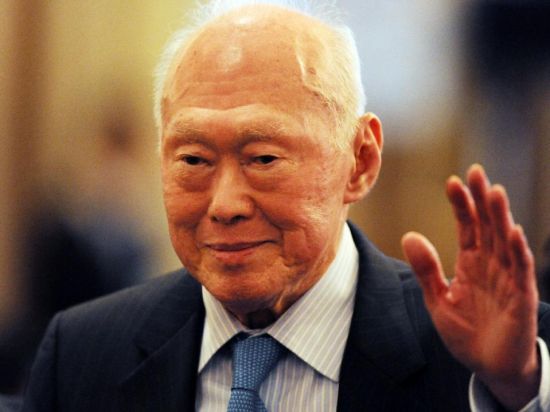
Lee Kuan Yew tells China how to play the Western media rules

Well, for all of us here, bloggers or surfers, the advice for China's ossfied "Propaganda Department" is quite unaimous -- learn to play by their rules.

Now Senior Minister Lee Kuan Yew weighed in. (via Blood and Treasure blog, and also Danwei)

  • my outlook, my mental approach is different from theirs. I would laugh at the west. Just like, you know, they say “Singapore is a fine city.” Everything is fine, no chewing gum, no litter in the streets, it's antiseptic, it's sterile. I don't take offence.
    People come here, people stay. It's safe, 3 a.m. in the morning, you can go jogging by the marina, nothing happens to you, no rape, and no muggings. News gets out: “We are dull.”
    Now, we are not dull, we are quite cool. We're going to have reverse bungee, all-night dining by the river and by the marina, two integrated resorts, Formula One. How do you explain that? Whether they like it or not, they have to shift the nuances.
  • You take Tibet. Who started it? It was started by the Tibetans. The March incident, March 14. I was reading Jonathan Eyal who writes for our Straits Times. He was a commentator from London. He is from I think Chatham House, a very thoughtful man. He said if they had called in the newspapers right from the word go, and said, look, this is what happened. The Economist correspondent was in Lhasa when it happened and wrote about it. He was favorable to them. The rioters started killing people and they were not reacting. The orders were not to shoot, not to take on the rioters because they didn't want trouble. Had they engaged the west, all this would have turned out differently.
    Why didn't they? Because there was a chasm between their mental make up and that of the west. So they say all western correspondents out, that means you have got something to hide. I think that was not very wise. Supposing it was Singapore, do we say all correspondents out? No. I say look come on, stay, watch it, see what happens, see who started what.
    Are they [the Chinese] stupid? They can't do what we do? No. Its just people at the people at the top have not been educated in the west, they have not been exposed to that kind of environment, that kind of rules of the game, and are not playing by those rules of the game.
    The day they build up an educated middle class, a large middle class, huge numbers of whom have been educated abroad, PHDs, MBAs in America, Europe, Japan elsewhere, and they are the people setting policies at the top, not people whose mental mindsets are from Soviet days, that day they will find they can play by the western rules and win.

I am a bit shortsighted than Senior Minister Lee. I think it takes more than (or it does not really) a new western world exposed generation to pull this. The source of the problem is not just the old hags at the notorious Propaganda Dept (which controls SARFT and the media). It is the extreme risk-averseness of the government which picked the Propaganda heads. This would hinder the effort to let in foreign reporters. However, Mr Lee is right. With the ubiquitous DV and camera phones plus the internet, with or without foreign reporter there is really little difference. They might as well let them in.

If what Mr Lee said is serious. The Singaporeans have to thank the MSM for labeling Singapore "dull", as it forced it to become cooler. In the same spirit, when China becomes "cool", the MSM should be credited, whatever their "original intention" was. The great people are those who could turn even the malicious force against them into something good for themselves. Mr Lee is a great person. China needs to take heed of him.

Anyway, I think what Mr Lee showed is a win-win scenario. Just like in his example of arm-wrestling between Singapore and the MSM. Singapore is now not dull (even if not all agree it is "cool"). When China takes his advise, the accompanying measures (which is as harmless to China itself as making Singapore "cool" for Singapore) will transform China, into something that is closer to the "Western ideal" -- well, in reality, the "universal ideal" which is created by extracting the portion of Western ideal which also is acceptable by China. (again, the "coolness" which fits both Mr Lee's and MSM's definition).

The nitpicking I have on Mr Lee is the notorious T3, and the equally notorious Norman Foster for airport, who had so much pratice at London's Heathrow that walking a km is considered short stroll. T3, though better than Chek Lap Kwok in terms of the limping walks, is not what Mr Lee thinks. It still suffers from the Heathrow/Chek Lap Kwok syndrome, i.e. they are designed as your exercise machines, not as your airport.

2008-05-09

The demise of the HK Alliance

Wang Xizhe is a prominent (pro-democracy) dissident from China. He has spent more than 10 years in jail in China. He had a history of not singing with the crowd.

He has a prediction, that the life of the "HK Alliance" (in support for patriotic democracy movement of China) is numbered, due to a series of strategic mistakes. (HT and English translation). For the most recent example, he argued, The HKA has not been entirely tactful in its joining the protest against the Olympic Torch Relay in HK. Because this alienates its supporters (most of them, are "patriotic" and at the same time pro-democratic). He suggested by this year's date of 8x8 the turn-out number will reduce significantly.

I agree with his conclusion. But I am skeptical about the 'test' he suggested. Because
1) What can be alienated has been alienated, many times, and long ago. e.g. by the infamous statement Martin Lee made after the Belgrade Emabssy Fiasco. Lee defended the US bombing and faulted the Chinese within hours of the protests, acting as if he had more information than anyone else (quite unscrupulous for a successful barrister). So there is really no incremental difference that can be observed this year.
2) The "HKA" is not really a political party as Wang said (or wanted it to be). It is more of an idealist group than some organization that was established to achieve a clear political agenda. But Wang was right that its most recent action did not show clear alignment with its proclaimed ideal "patriotic democracy movement of China"

Perhaps Wang is right. That the "reminder" effect may still be significant. We will see in less than a month.

2008-05-08

Boycott Guangzhou brands and businesses?


See this.
For those who boycott Carrefour, it is time to create a list of Guangzhou businesses and brands.

2008-05-07

Spiegel vs Adidas

This is the best debate for the past few month, or shall I say, "ever"?

Well, it is supposed to be an interview. But the Spielgel reporter turned it into a debate, perhaps subconsciously (I highlighted some of these in bold type, short note in italic and blue fonts). But we thank the reporter for giving a chance for Mr Hainer to retort and defend, and we thank Spiegel for publishing it.

Transparency is good for the world, and it worked for China when Mao's decision to publish Synopsis for Project 571 has led to the awakening of the Chinese people from the Cultural Revolution 'brainwash'. This is probably what Spiegel (or RSF for that matter) should really be focusing in.

---

SPIEGEL INTERVIEW WITH ADIDAS CEO HERBERT HAINER

SPIEGEL: Mr. Hainer, the Olympic torch is being guarded by Chinese security officers (more...) who are part of a known paramilitary group. The group is normally used to protect Chinese government buildings or to stifle unrest in places like Tibet. When these people acted against demonstrators here in Europe, they were wearing Adidas tracksuits and shoes. That isn't exactly nice, is it?
Hainer: Nice? To be perfectly honest, I wasn't thinking about the word "nice" when I saw the images of the clashes in Istanbul. In the media, we constantly see people wearing our products. What I fear is that these games are now only about politics.

SPIEGEL: So it isn't a problem that these paramilitary thugs were wearing Adidas?
Hainer: It's a challenge for us to be providing equipment for the Olympic Games, for 100,000 helpers, athletes and officials, all of whom are doing their part to ensure that the games will be a peaceful and successful event. We did the same thing in Athens in 2004, and we'll be doing it again in London in 2012. The torch runners are just as much a part of it all as those who make sure that the torch relay can take place without disturbances. In fact, they are simply doing their…
SPIEGEL: …job?
Hainer: Do you think it's OK to violently disrupt the torch relay? It's OK that people use these events to publicize their political beliefs, but, in my opinion, that doesn't give them the right to violently disrupt the torch relay or extinguish the flame.

SPIEGEL: The torch relay has turned into a farce. The longer it lasts, the more professional are the attempts to exclude the public from this event.
Hainer: And the more professional are the attempts to disrupt it. Let's talk about the significance of the torch relay. The torch is a symbol of the Olympic Games, of peace and togetherness. It's a good idea. And this idea is now being misused. I believe in the Olympic ideal and in the torch that symbolizes this ideal. We should be condemning not those who have this ideal, but those who try to destroy it.

SPIEGEL: But the politicization of the games and the torch relay is a result of China's policies in Tibet. And don't you think it's questionable for these people to be attacking demonstrators on foreign territory? (Spiegel again used lie to bait Hainer. We may have see the blue tracksuits pushing the the torch grabbers away, but what the hell was he talking about they going out to "attack" the demonstrators? This is really unprofessional for Spiegel)
Hainer: You can't exactly expect us to resolve these sovereignty issues. Our job is to support sports and the athletes, and we will continue to do so -- just as we've been doing for the past 80 years. When (Adidas founder) Adi Dassler provided the equipment for the black sprinter Jesse Owens in 1936, it certainly wasn't a welcome move in Germany. We provided the gear for nations in the Soviet bloc at the 1980 Moscow games, and that too was no political statement. It would be wrong for everyone to simply capitulate now. I continue to be firmly convinced that sports bring together the peoples of this world like almost nothing else -- certainly more than many political movements. For instance, the 2006 football World Cup played an enormous role in improving Germany's image in the world.

SPIEGEL: Can't you say to the Chinese: We don't want these people wearing our tracksuits any more?
Hainer: Why should I do that? If we wanted to conceal something, we wouldn't sponsor anything at all. I don't have a guilty conscience. But please understand me correctly: Our commitment to the Olympics is not a political commitment. It's not a commitment to any particular social system or cultural idea. It is a commitment to sport.

SPIEGEL: Major international sponsors of the International Olympic Committee (IOC), as well as Volkswagen, which, like Adidas, is sponsoring the Chinese organizing committee, are deeply concerned.
Hainer: Nowadays, anyone who supports such major events must expect that they will be used as a platform. In fact, there is no better platform. Let's be honest: The Tibet conflict has been around for more than 50 years, and now the months leading up the games are being used to market this conflict politically.

SPIEGEL: That sounds as if you are criticizing the human rights groups, Tibetans and non-governmental organizations. The games are also a platform for Adidas. You hope to position yourself as a sporting goods maker on the Chinese market.
Hainer: It's not a criticism of these groups. But I am astonished when I read in the papers that sponsors like Adidas and Volkswagen were supposedly surprised by the events. No one in our company is surprised when there are demonstrations surrounding the games. They will not be the last.
SPIEGEL: China and human rights violations (more...) -- this isn't exactly a new issue.
Hainer: Look back in history to see what boycotts have achieved: absolutely nothing. Try talking to athletes who were prevented from taking part in the games for political reasons. I'm opposed to any boycott. I read a survey that said 88 percent of Germans are opposed to a boycott. Even the Dalai Lama doesn't want a boycott. One of the purposes of the Olympic Games is to bring the nations of the world closer together, so that they can conduct an open dialogue. We should be careful about constantly imposing our values on others.
SPIEGEL: Before the games were awarded in 2001, the Chinese made human rights commitments which they have not upheld.
Hainer: It's the IOC's job to sit down with the Beijing organizing committee afterwards to discuss how it went. I've been to many Olympic Games. More than 10,000 athletes will be living together in the Olympic village like in a giant youth camp. Chinese people will come together with athletes from around the world, which will lead to a gradual improvement in communication and the establishment of a more open society. I am convinced of that. It's an evolutionary process, not a revolution.
SPIEGEL: But isn't it possible that the protests against the torch relay are also part of this change process, and therefore necessary?
Hainer: I'm completely in favor of people expressing their views in connection with such events. But using force to take the torch away from someone -- that goes beyond the limits of freedom of expression.


SPIEGEL: The Olympic "youth camp" is of great commercial importance to you. In addition to the Chinese team, Adidas is providing the equipment for 15 other national teams, and you are involved in 27 of the 28 Olympic disciplines. You have reportedly paid the Beijing organizing committee a total of €70 million ($112 million) for your sponsorship.

Hainer: We are not investing in an event that lasts only 17 days and at which we hope to make as much money as possible. Rather, the Olympics have been part of our brand for decades. That's why we provide equipment for more disciplines than any other company. We have sponsored events and campaigns in China for the past four years, and we have communicated to the Chinese that we support the Olympics and sports in general, and that we are looking forward to a fantastic games. We want to develop an emotional connection with consumers in China. Our goal is to reach more than €1 billion ($1.6 billion) in sales in China by 2010.

SPIEGEL: In that case, taking a political stance probably doesn't make much sense?
Hainer: You will not hear me making any political statements, neither on China nor on any other topic.

SPIEGEL: Do you have a personal opinion?
Hainer: Yes. If you want to bring the people of this world together, you have to be willing to engage with countries that do not share our democratic values.

SPIEGEL: Organizations like Human Rights Watch want you to make statements on human rights issues, on China's dialogue with the Dalai Lama and on freedom of the press in Tibet.
Hainer: It's an attempt to drag us into politics, and we won't allow it. Politics is the responsibility of the United Nations and individual governments. It isn't right to fight out these disputes at the expense of the athletes -- or at the expense of the sponsors.

SPIEGEL: But don't companies like McDonald's, Coca-Cola, Volkswagen and Adidas allow themselves to be used for political ends?
Hainer: Then we couldn't do anything any more. No World Cup, nothing. We would have to speak out against (the Basque separatist group) ETA in Spain, and in the United States we'd have to tell the government how we feel about Guantanamo.

SPIEGEL: China still carries out a massive number of executions each year. (on a per capita basis I am not sure if China is in the first tier these days)
Hainer: Unfortunately, executions are even carried out in democratic nations. But, once again, Adidas is not a political operation, and I am not a politician. Or would you prefer to see me in charge of the government instead of (German Chancellor) Angela Merkel?

SPIEGEL: Jürgen Hambrecht, the head of BASF, recently said that the Germans would be well advised to stay out of the conflict (more...).
Hainer: He also said that in an interview with (German news show) "Heute Journal," in his role as the chairman of the Asia Pacific Committee of German Business. And he's right. For Germany, as an exporting nation, the Chinese market is tremendously important. We should be careful not to rush to judge, and we should look at things from both sides.

SPIEGEL: Don't you have to weigh the damage you inflict on your image in the West for not taking a position on China, against the losses you would incur in the Chinese market if you did speak out?
Hainer: No. The criticism is especially loud in Germany and France, but it's significantly quieter in many other countries. And in Asia, not just in China, people are looking forward to the games with great anticipation. I also believe that Western consumers -- unlike some in politics and the media -- understand our role correctly. We are involved in the Olympics because we make equipment for athletes. In any event, we have received more emailed complaints in the past about issues like the use of kangaroo leather in our shoe production than we have recently had about China. We have not noticed any damage to our image so far.

SPIEGEL: What would be the consequences if you were to suddenly take a political stance on China?
Hainer: It would certainly not make the world a better place. We, as a company, do what we can within the confines of our capabilities and our scope of responsibility, especially when it comes to working with our suppliers and factories in China. We insist on setting social standards in our agreements. In China, 300,000 people work indirectly for us. Wages are rising there, and more and more people can now afford a better life. That's our contribution.

SPIEGEL: Two weeks ago, non-governmental organizations published a report in Brussels on the athletic wear industry. Adidas was accused of exploitation in that report.
Hainer: At the same time, we are praised for having been the impetus for many positive changes. For years, we have repeatedly been attacked at our shareholder meetings, even though we are in fact a model company. We send out our own inspectors and allow the NGOs' inspectors into our factories. Those who violate our standards can expect their contracts to be cancelled. We publish an extensive social and environmental report each year. Of course, someone always comes along and tells us what we ought to improve. Just like everyone else, we're not perfect.

SPIEGEL: Do you feel hounded?
Hainer: Not hounded, but sometimes used. Attacking successful companies like Adidas generates a lot more attention than criticizing some no-name company.

SPIEGEL: In China, Adidas products are made in a total of 264 factories. Can you rule out corruption there?
Hainer: We try to crack down on every kind of criminality. I have been with Adidas for 20 years now, and we have been cheated many times. A few months ago, we fired the head of our factory outlet here in (the Bavarian town of) Herzogenaurach. We don't have to go to China to find corruption.

SPIEGEL: How often do you travel to China?
Hainer: Four times a year.

SPIEGEL: Are you in contact with Chinese party functionaries?
Hainer: I had a lot a contact with the organizers of the games. For instance, I had two meetings with the Chinese sports minister. These are intelligent people, demanding, but also extremely reliable. Of course, they too have figured out that they have an enormous market, one that everyone wants to tap, and they've become more careful as a result. It takes time to gain their confidence. But they are fulfilling all our agreements and contracts. Naturally there have also been critical moments when mistakes have happened.

SPIEGEL: For example?
Hainer: We made a bag with a Chinese flag on it, but instead of the stars, we inserted the Adidas three-leaf logo into the flag. A designer was being a little too creative. The Chinese complained, and we pulled the bags from stores immediately.

SPIEGEL: Is it is more stressful for an executive to deal with a Western democracy than a communist dictatorship?
Hainer: I don't deal with political structures, just with consumers. And they react differently, depending on the kinds of social and political conditions in which they were brought up. With some consumers, it just happens to take a little longer for us to help them realize how happy our products can make them.

SPIEGEL: You cancelled a press trip to China in late April. Is it too risky for you to reschedule the trip?
Hainer: Well, the main reason we canceled the trip was that our big new Adidas store in Beijing wasn't finished yet.

SPIEGEL: Isn't that just an excuse? You weren't exactly planning to spend days examining shelves in some store with the journalists, were you?
Hainer: Some store? You're going to make me fall off my chair. It's the biggest Adidas store in the world.

SPIEGEL: There were no political reasons?
Hainer: No. The delays in opening the store also have nothing to do with claims of reprisals by the Chinese. There were construction delays. We now plan to open in mid-June, and you are cordially invited to visit it at any time.

SPIEGEL: Are you traveling to Beijing for the Olympic Games' opening ceremony on Aug. 8?
Hainer: Of course.

SPIEGEL: During the games, the German water polo team plans to wear orange bathrobes to protest China's Tibet policy. You are the team's official outfitter. Will they be Adidas bathrobes?
Hainer: Certainly not. That's the athletes' business. We will neither stand in their way nor support them in this effort.

SPIEGEL: Would you have any objection to the Dalai Lama wearing Adidas?
Hainer: Not at all. Actually it's always been my goal to one day see the pope wearing our three stripes. With a German pope, the chances of that happening have never been as good.
SPIEGEL: After his operations, former Cuban President Fidel Castro appeared in an Adidas tracksuit several times.

Hainer: We don't have a problem with that, either.
SPIEGEL: Mr. Hainer, thank you for this interview.

Koo Kuan-min mimicking CNN?

CNN, ""CNN would like to clarify that it was not Mr. Cafferty's, nor CNN's, intent to cause offense to the Chinese people, and [CNN] would apologize to anyone who has interpreted the comments in this way."

Taiwan's DPP chariman candidate, after telling the public that DPP should not be run by a single unmarried middled age woman (i.e., his competitor Ms Tsai Ying-wen) , "apologize", "If what I said made someone uncomfortable, I feel very sorry (如果他說的話有讓人覺得不舒服,他感到很抱歉)"

Is Koo very "CNN"?